Life in Budapest

by Barbara Franz (posted on December 6, 2022)

There are many things that are surprising when living in an autocratic country. When I moved to Budapest, the capital of Hungary, to study and teach here for a semester as Fulbright Scholar, I expected to be living and working in a largely homogenous, traditional, and xenophobic, society. Within the first couple of weeks, it became clear to me that my stereotypes are largely unfounded and that life in Budapest is much more complex and diverse than expected.

Wandering around Budapest’s 7th district one September evening looking for dinner, we stumbled into one of the many Middle Eastern restaurants. This one also has a take-out option. The line was short, only one young woman, clearly an American—because only American tourists wear their masks indoors, is seems—was in line ahead of us. As we decided to order out and got in line behind her, I began to observe a number of oddities: One of the many food delivery guys had come in with us and waited politely to be addressed by one of the two restaurant workers hustling behind the counter. The food delivery business is huge in Budapest. As in many other cities, food delivery work is one of the most exploitive and precarious elements of the service economy and it has been booming since the Covid-19 pandemic in Hungary. Like in the U.S., Hungary’s labor market experienced a  “flexibilization” of labor to allow the employer to use new technology in order to mainstream new organizational structures, such as subcontracting and outsourcing, to maximize profits (Nagy 2022). The food curriers work as individual entrepreneurs and lack legal labor protection; the labor costs and risks are individualized and borne by the riders alone. 

Eventually one of the two restaurant workers saw the currier and addressed him. I was intrigued by the brief exchange in front of me because neither of the two workers spoke Hungarian. Or English. Instead, they communicated mostly by speaking in their respective languages, but by doing so extra loudly, apparently in order to make the other person “understand” them. After the exchange, the delivery guy left immediately—he apparently had asked whether he was at the correct place and was told “No”— only to return 2 minutes later— this time with his cell phone in his hand, pointing at it, loudly stating “Falafel Bar”?!  It was obvious that the food currier was at the right place, attempting to pick up food ordered online from the restaurant. He might have been fresh from the boat from a country in Central Asia perhaps, most likely working one of his first shifts for the delivery company Wolt, with their signature super-large, baby-blue rectangular backpacks.  

The food worker, who initially gave the currier misleading information, seemed to be a somewhat-bewildered young Middle Eastern man, which, I thought, was not surprising. He prepared food during the busiest time of the day behind the take-out counter and needed to juggle a lot of things at once.  (Except he really didn’t. More on this later.) 

However, both of these men somehow had made it to Hungary, a country whose government openly stands for homogeneity, and is rigidly anti-immigrant both in sentiment and in policy. Hungary’s Prime Minister Victor Orbán rejects all types of immigration and, according to some studies, the percentage of the Hungarians who hold xenophobic beliefs had topped 50 percent in 2018. Nevertheless Budapest is one of the biggest tourist hubs of the planet and there are hundreds of Middle Eastern, Indian, Chinese, Vietnamese, Greek, and many other ethnic restaurants. Most of them serve excellent, exotic dishes to tourists and locals alike.  

The currier’s ordered food was not ready. The currier moved out of the way, and stood in the back corner of the small restaurant, right next to me, patiently waiting for his delivery to be prepared. While speed is one quality of fast food restaurants all over the world, the food delivery business runs on seconds, and, I was wondering whether  the currier would not be paid if his delivery was late. Many thousands of food curriers deliver food in Budapest on their bikes. It seems a majority of the food curriers are migrants. Their work includes long hours and minimal pay for often dangerous delivery rides with bikes through narrow streets filled with crazy car drivers. They make about HUF 500-750 (USD 1.29-1.93) per hour without tip. I looked at the stoic and patient face of the young man next to me, wondering what was going through his mind. He did not look like a person who came here to turn food delivery into his professional career. Perhaps he came to make money and send remittances home to his family. Or, perhaps he came to study at a place like Eötvös Loránd University (ELTE). 

ELTE is the last state-financed university in Budapest. The regime has “privatized” all other institutions of higher learning. What “privatizing” universities has really meant is to reorganize them and to place them under the control of newly established foundations, the boards of which are filled with Fidesz politicians. De facto, this move has brought under party control the last of the country’s free institutions that promoted critical thinking, after major media outlets and judiciary had already been coopted into the autocratic system. In the case of the universities, however, massive protests erupted; For example, the reorganization of the University of Theater and Film Arts, resulted in months of protests against the government’s education policy, but to no avail. That university was eventually privatized. But not so ELTE.

Established in 1635, ELTE is one the country’s  oldest institutions of higher learning. It is also the largest university, with a massive bureaucratic arm, which might have saved it from reorganization thus far. ELTE has remained one of the last remaining intellectual hotbeds of critical thinking, resistance and defiance, perhaps because of its large social science center, the largest in the country. Many social science fields offer English-language tracks in their undergraduate and graduate degree programs which makes studying in Budapest very attractive for many young people from all over the world.

More than half of the students that I’ve taught this semester at ELTE, and specifically in the Political and International Studies Institute are international students. Many of them come from Mongolia, China, and South Korea, the Balkans and the Baltics, from Nigeria, and from many North African states. Some of my best students hailed from Brazil, Ecuador, and other Latin American countries. Perhaps, I speculated, the young delivery currier is planning on enrolling in ELTE.

His delivery finally was ready, he picked it up and quickly left. 

We had been standing in line for some time, and I finally got to place my order. The older restaurant worker, a man in his late 50s or early 60s, possibly the owner of the establishment, asked me in Hungarian what I wanted. As always, I replied in English. The man immediately switched to perfect English asking me for my name, in order to identify my order. Once I responded, he looked at me and said: “Oh ‘Barbara,’ that’s such a beautiful name!” I was taken aback because I didn’t expect to find such a genuine and highly personable response of from a Hungarian restaurant worker. Many things seemed to be odd with this restaurant. 

For one, things went really slowly. At this point we had been standing around for good 15 minutes and the line behind us had been growing. However, the young people in line were uncharacteristically patient. Also, the food prepping was done really slowly. I began to realize that the other worker behind the counter—the person that communicated with the food currier—was somewhat odd. He really didn’t do any work. Instead, he put a few Kovászos Uborka (fermented cucumbers) on the shawarma plate, carefully (and very slowly) rearranged the lamb patties on the Kufta plate, and took the falafel out of the frier too early. I realized that the older worker who had taken my order in reality did all the work, and in addition, he redressed the younger guy’s mistakes in a friendly manner without losing his temper. Once I saw this, I was totally at awe, feeling that this situation needs to be further investigated because, I myself (and many other humans, I know) would have lost it repeatedly in a stressful situation like that. However, the older food worker kept it calm, and his tranquility apparently had an effect on the entire room full of customers who all were standing there patiently waiting for their take out food. (At one point the younger worker turned around and I saw a big pink scar running down the back of his entire head—clearly a residue from some major accident.) I made of this, that the older worker  had employed the younger guy not because for efficiency but for other, deeper, more humane reasons. 

This and many similar acts of kindness, where migrants engage in back-breaking work, while being extremely professional, considering, and disciplined, take place every moment of every day in Budapest. At the same time, Victor Orbán has been scapegoating migrants for almost 10 years, claiming that there is an immigration onslaught on Hungary, which is threatening the ethnic Hungarian majority. Orbán very successfully influenced public opinion. The level of xenophobia and fear of foreigners in the Hungarian population shot through the roof (Simonovits 2020). 

Without a doubt, migration is one of the defining issues of Hungarian politics. The 2015-16 migration crisis shook the European Union and gave rise to an entirely new situation in Hungarian politics. Orbán, with his wholesale rejection of all types of immigration, effectively monopolized the issue in the Hungarian domestic context in a period that was fully dominated by the topic of migration. With his anti-immigration propaganda, he managed to rescue his party Fidesz and set it on a rising trajectory in the polls again (Juhász, Molnár, and Zgut 2017). The level of xenophobia and fear of foreigners among the Hungarian population shot through the roof (Simonovits 2020). Today Hungary  ranks as one of the most xenophobic countries in Europe. 

However, Hungary and Budapest are major tourist centers. Prior to the outbreak of the pandemic, 4.4 million tourists visited Budapest alone in 2019. Tourism directly accounted in 2017 for over 418 000 jobs, or 9.6% of total employment  in the country. The contribution of tourism to GDP reached 13.2% in 2019 and the growth rate of the tourism sector exceeded both the EU and worldwide average, according to a government report. For Budapest, these numbers are much higher. Curiously, migrants comprise the backbone that supports much of Budapest’s tourism industry, and without the professional, extremely kind and friendly migrant work, many of the millions of tourists moving through this city might find the restaurants, coffee shops, fast food joints, hotels, and bars that make them feel at home not so welcoming.

The incongruity between life in an autocratic state with xenophobic anti-foreigner legislation (Majtényi 2022) and daily life in its multicultural capital, for me, was niftily expressed through this snapshot in the Falafel Bar —where a number of tourists  found themselves waiting patiently for their food, that was prepared by a kind and considerate Middle Eastern man who singlehandedly ran the entire restaurant and also provided a job for a differently-abled friend and serviced food delivery services that provide jobs for the most gritty of the recently arrived immigrants. None of us in this restaurant appeared to be a Hungarian citizens; but probably most of us were aware of the iron fist of Hungarian immigration and minority politics. However, overall, this situation also illustrates the grit and resilience of migrants who survive and even thrive in a system that discriminates against them on a daily basis. Migrant men and women in Budapest marvelously represent what James Scott has labeled the everyday resistance of the weak who have not consented to the dominance of the state. 

Literature:

Majtényi, B. (2022). Recasting Political Community. Engaging Authority: Citizenship and Political Community, 39, pp. 39-56.

Nagy, K. (2022). Freedom within Frames The perception of paradoxical freedom among workers of the food delivery sector in Budapest (Doctoral dissertation, Central European University).

Simonovits, B. (2020). The Public Perception of the Migration Crisis from the Hungarian Point of View: Evidence from the Field. In: Glorius, B., Doomernik, J. (eds) Geographies of Asylum in Europe and the Role of European Localities. IMISCOE Research Series. Springer.

Juhász, A., Molnár, C., & Zgut, E. (2017). Refugees, asylum and migration issues in Hungary. Heinrich-Böll-Stiftung.

*******
Border funding instead of climate mitigation

by Barbara Franz

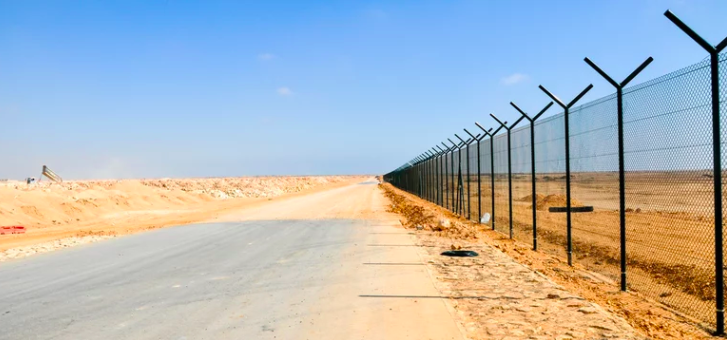
How will the world look in 20, 50, 100 years? It seems that there is an ongoing rivalry between two visions of the planet’s future: a socialist paradise versus, in Yuval Harari’s terms, “a network of fortresses” characterized by ultra-nationalist techno-fascist governments. The Office of the Director of National Intelligence published the 2021 Global Tends 2040 in which it describes five future scenarios, two of which fit the network of fortresses and are entitled pointedly “Separate Silos” and “Competitive Coexistence.” (Only one of these five scenarios includes the socialist idea of peaceful international coexistence.) It seems to me that the “network of fortresses” version is becoming reality much faster than imagined. Evidence for this can be found in the Transnational Institute’s most recent study, which reveals that the world’s wealthiest nations are already prioritizing their border built-up and militarization rather than actions to ameliorate climate change and foster peaceful international cohabitation. 

In the Transnational Institute’s report, Todd Miller, Nick Buxton, and Mark Akkerman show that the world’s biggest emitters of green house gases are building a “Global Climate Wall” that aims to seal off powerful countries from refugees, asylum seekers and migrants, rather than addressing the causes of displacement. Seven countries who are responsible for 48% of the world’s historic greenhouse gas (GHG)* emissions—United States, Germany, Japan, the United Kingdom, Canada, France and Australia— collectively spent more than twice as much ($33.1 billion) on border security and immigration enforcement, as on climate change mitigation ($14.4 billion) between 2013 and 2018. The spending on border militarization and securitization by these seven countries rose by 29% between 2013 and 2018. The U.S. spending tripled in that time span, averaging annually $19.6 billion. The budget for the European Union (EU) border agency, Frontex, has increased by a whopping 2,763% since its founding from €5.2 million in 2005 to €460 million in 2020, with €5.6 billion reserved for the agency from 2021 to 2027. The wall-building and militarization of borders in the global North clearly focuses on keeping out the undesired consequences of the expanding global climate catastrophe—refugees and asylum seekers. 

However, the perceived crises at the borders have led to a booming border militarization immigration enforcement industry. Miller et al., show that in the time frame from 2008 to 2020 in the U.S., Customs and Border Protection and Immigration and Customs Enforcement issued more than 105,000 contracts worth $55 billion to private companies, such as CoreCivic, Deloitte, Elbit Systems, GEO Group, General Atomics, General Dynamics, G4S, IBM, Leidos, Lockheed Martin, L3Harris, Northrop Grumman, and Palantir. These companies provide anything from private detention facilities, surveillance technology, biometric systems, and data bases to armored transport and drones.**

According to Chi Xu et al., who used data from the US National Oceanic and Atmospheric Administration in their study, by 2070 one to three billion people are projected to live in climate conditions outside of those that have sustained human life for 6,000 years. The authors’ analysis shows that, if we continue living with a “business as usual” approach to climate change, in one third of the planet that is currently inhabited, the mean annual temperature will rise to an unbearable 29°C (84.2°F). Right now, 1% of the earth’s surface is a barely live-able hot zone; by 2070, that area might entail up to 19% of the earth’s surface

The data sets discussed in Miller et al., and  Chi Xu et al. exhibit clearly not just how irrelevant the governments of the major powers (all except Australia, located in the global North) consider the pending climate catastrophe to be. They also reveal how misguided and shortsighted it is to continue funding border militarization and surveillance. 

No wall or militarized border will keep the inhabitants of the wealthy countries safe. As the current spread of various variants of COVID-19 shows, borders even with sophisticated security apparatus cannot stop global spread and contamination in a capitalist world that relies on the exploitation of labor and resources of the global south. Borders cannot prevent billions of desperate people from entering the global north’s network of fortress states. Instead, international solidarity expressed through climate finance could help mitigate the impacts of the unfolding climate catastrophe and aid countries in adapting to the new reality, including supporting people who need to relocate or to migrate abroad. Yet the richest countries have failed even to keep their pledges of $100 billion a year in climate finance. The latest figures from the Organisation for Economic Co-operation and Development (OECD) reported $79.6 billion in total climate finance in 2019, but according to research published by Oxfam International, once over-reporting and loans rather than grants are taken into account, the true volume of climate finance may be less than half of what is reported by developed countries. Only a more cooperative, less-market-driven approach to climate change will lead to successful mitigation of its effects on the planet, its environment, and its people. 

###

*) Miller, Buxton and Akkerman use a historic metric of world’s greenhouse gas (GHG) emissions since 1850. Other authors have calculated similar GHG emission output per state and per capita.  The largest historic GHG emitters are also the world’s top border enforcers. The poorest 50% of the world’s population is responsible for just 7% of global emissions, yet developing countries will face 75-80% of the costs of climate change.

**) These companies are usually also involved in what has been referred to as “border externalization,” the outsourcing of immigration control and deterrence activities, usually conducted by border patrol agents, to foreign police or military agents. The U.S. has engaged in border externalization to Latin American countries—e.g.,Mexico (Operation Merida) and Guatemala—and the EU has externalized Frontex’s work to many North African countries, e.g., it has funded border police and immigration detention facilities in Morocco and Libya. Often the actual outsourcing work is done through contract work by private companies, guaranteeing a booming market for these companies.  

The Title 42 “Crisis” And why a continuation of Trump’s Anti-immigrant policies will hurt the Democrats in the midterms

by Barbara Franz (posted on October 31, 2021)

Pointing at “crisis at the border” and the “emergency” produced by a flood of immigrants there, the Biden Administration is embracing mass expulsions based on the continuation of Title 42, an obscure provision of the 1944 U.S. Public Health Services Law. The former Trump administration invoked the clause to achieve its long-desired goal of de facto eliminating the right to seek asylum in this country. The Biden administration has continued using Title 42 which has been counterproductive in that it has massively contributed to the current surge in border apprehensions. U.S. Custom’s and Border Protection officers apprehended and deported 1.7 million people in 2021 at the southern border. At the same time, ports of entry remain open with nearly 11 million people crossing the southern border every month and thousands flying into the United States every day. By embracing mass deportations, the Biden administration has made clear that its commitment to human rights is more rhetoric than actual policy. However, this policy will backfire and hurt the Democrats in the midterm elections one year from now. 

The number of apprehensions is inflated because the identity of people deported through Title 42 is not recorded. Many migrants enter the country twice or more times and therefore many thousands of deported migrants are being counted more than once in Border Patrol apprehensions statistics during the last fiscal year. The recidivism rate may be as high as 38 percent — which means that more than one-third of the individuals removed from U.S territory were apprehended more than once. By continuing Title 42, the Biden administration contributes to the ever-growing backlog of cases at the border. 

Title 42 allowed the Trump administration to repudiate American asylum law. The Biden administration has continued to use the same perceived (and clearly self-inflicted) crisis rhetoric to justify the continued enforcement of Title 42. Elaine Scarry argues that while the normativity of the anti-immigrant view calls for the enforcement of existing law, crises and emergencies call for the suspension of or outright abrogation of existing law. The Biden administration’s continued reliance on Title 42 reinforces the perception that we are experiencing a state of emergency on the southern border, and that, therefore, we need to restrict the rule of law in the name of the public heath.  In his book State of Exception, the philosopher Giorgio Agamben investigates the increase of power by governments in such “supposed times” of crises. Joel Sati shows how such governmental claims of emergency are important because they allow politicians to frame the response to a problem as needing to be imminent in order to overcome “the threat” to the body politic. This strengthens and spreads dangerous xenophobia, mobilizing Trump Republicans. On the other hand, it disappoints progressives and therefore will reduce the progressive vote for Democrats in the midterms. 

Instead of mass deportations, U.S. asylum law should be reinstated. Even during the pandemic, asylum applicants can be easily tested, and if COVID-19 positive, they can be quarantined and treated medically. If negative, they can be released temporarily into the country pending a final immigration court decision. By eliminating recidivism,  this would decrease the humongous case backlog. Mass deportations not only violate the law, they run counter to America’s humanitarian responsibilities and international obligations. Reinstating U.S. asylum law will dampen the energy of the Right-wing by reducing the backlog and the appearance of a crisis, and it will energize and gain the support of progressives that will be needed for the midterms. 

MAGA sign in the waiting for 2022

Border Militarization and the rise of a new Apartheid System in the Global North


by Barbara Franz

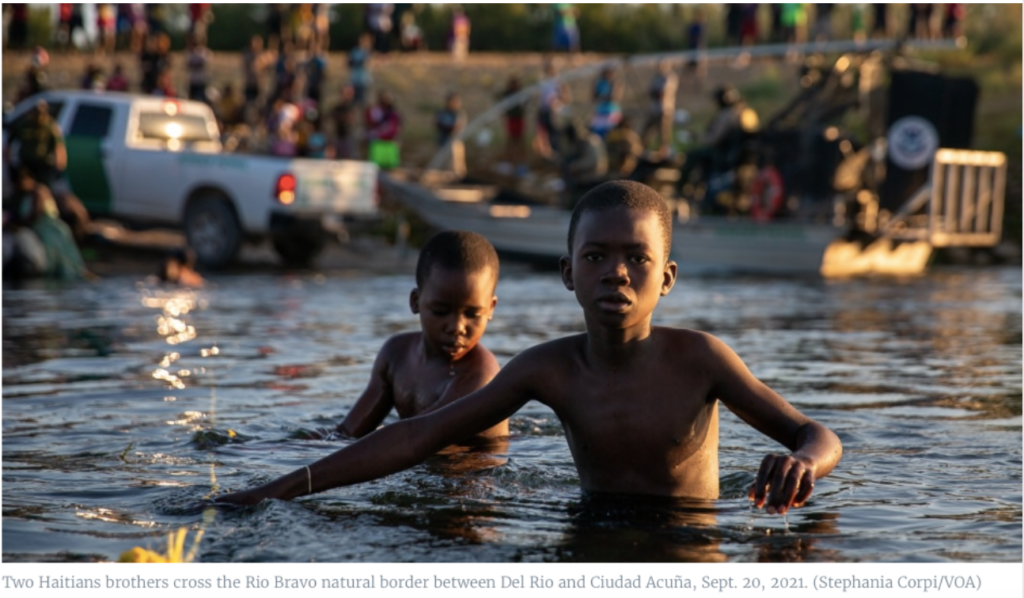
The Biden administration is in the process of deporting thousands of people to Haiti. Since viral images of Haitians escaping Immigration and Customs Enforcement (ICE) agents first became public in September, at least 60 ICE flights to Haiti carrying approximately upwards of 100 people each flight.This is just the latest expression of the ongoing war against refugees and asylum seekers in the Global North. Militarized borders, interdictions at sea, detention centers represent the criminalization of mobility around the world. In addition to family separations and mass deportations without an assessment of individual protection needs are standard policies in the USA and elsewhere today. The Global North—the United States, Canada, the European Union (EU), Israel, Australia, New Zealand, Russia, the Gulf states and East Asia—is massively investing in militarized border regimes that reach far beyond particular territorial borders to manage the movement of people from the Global South. Many American and European decision-makers have learned from (and are interested in copying) the Australian so-called Pacific Solution (2001-2008) and later Operation Sovereign Borders (2013 to present). These operations successfully prevent access to Australia’s territory for all displaced people traveling by boat, regardless of the legality of their asylum claims. All asylum seekers arriving by boat are intercepted on the sea and transported to detention centers in the Pacific island states of Nauru and Papua New Guinea (PNG).Throughout the 21st century European countries experimented with top-notch technology, such as development of a state-of-the-art surveillance system, but soon realized that humans cannot be easily stopped by such technology alone. What finally limited the immigration surges for the EU were bi-lateral and multilateral agreements with Turkey, Tunesia, Libya, as well as Morocco. These agreements— so-called Mobility Partnerships—have been evolving while sea crossings have spiked in the post-2011 period. In effect, countries like Ukraine (seeking to eventually join the EU) and Libya, Turkey and Morocco have become “border guards” for the EU. The idea behind these agreements is simple: Internal right-wing populist agitation has become more wide-spread since the 2015 the “refugee crisis” hit Europe. In order to prevent more right-wing populism domestically and its ascent to government (such as the 2016-20 Trump administration), the governments in Europe agreed on the enactment of drastic international measures. The completion of the externalization of Europe’s refugee and migration management is one of them.
A new militarized regime of border and mobility control is taking shape across the Global North. Catherine Besteman has shown that this militarized regime mimics South Africa’s system of racial apartheid that formally ended in 1994. Like that regime, the tools of the new global racialized containment policy aim to create an exploitable labor force and enclose those considered undesirable or expendable in territories, detention centers or refugee camps far from the borders of the Global North. Militarized apartheid is emerging as a global norm. Biden’s recent mass expulsion of Haitian refugees, asylum seekers, and immigrants is just one expression of this policy.